

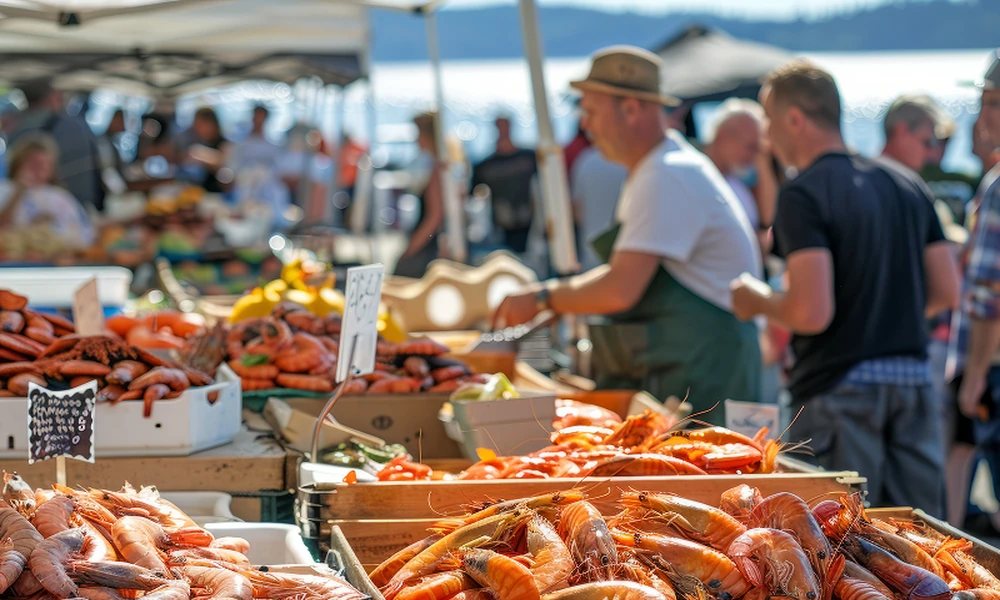
Walking the floor at FHA in Singapore, Asia’s leading international food and hospitality event, means encountering suppliers across frozen, chilled and processed seafood categories, each requiring a different set of questions to properly evaluate. Applying the same evaluation approach across all three often means missing category-specific factors that matter for each type of product.
Evaluating Frozen Seafood Suppliers
Frozen seafood evaluation centres largely around how the product was frozen and how consistently that condition has been maintained.
- Asking about the freezing method used, since techniques such as flash freezing can affect final product quality.
- Requesting documentation on temperature consistency throughout storage and transport.
- Checking packaging integrity, since compromised packaging can lead to freezer burn or contamination.
- Confirming shelf life expectations and any specific storage requirements once received.
Evaluating Chilled Seafood Suppliers
Chilled seafood carries tighter timing constraints than frozen product, which makes cold chain reliability a more immediate concern during evaluation.
- Asking how cold chain continuity is maintained from the supplier’s facility through to final delivery.
- Requesting information on delivery frequency and typical transit times.
- Reviewing temperature monitoring practices, including whether logs are kept and available for review.
- Clarifying the realistic shelf life once a product leaves the supplier’s control, given the shorter window compared to frozen options.
Evaluating Processed Seafood Suppliers
Processed seafood introduces additional considerations beyond storage and freshness, since the product itself has undergone further preparation.
- Asking about the sourcing of raw ingredients used in the processed product.
- Requesting a full list of additives, preservatives or allergens present in the finished product.
- Checking food safety certifications specific to the processing facility, not just the raw seafood sourcing.
- Asking whether private label or custom formulation options are available, if relevant to the operation’s needs.
Comparing Key Evaluation Points Across Categories
| Category | Primary Evaluation Focus | Key Questions to Ask |
|---|---|---|
| Frozen | Freezing method and storage consistency | How is temperature maintained throughout transport? |
| Chilled | Cold chain continuity and shelf life | How quickly can delivery reach the kitchen? |
| Processed | Ingredients, additives and facility certification | What’s in the product, and where was it processed? |
This comparison reflects general priorities for each category rather than an exhaustive checklist, since specific needs still vary by operation.
Practical Steps When Assessing Suppliers at the Event
A trade event setting allows for direct, in-person evaluation that’s harder to replicate through catalogues or phone calls alone.
- Requesting product samples where available, to assess quality firsthand rather than relying on descriptions.
- Asking suppliers to provide documentation, such as certifications or temperature logs, on the spot rather than promising to send it later.
- Clarifying minimum order quantities and typical logistics arrangements before any commitment is made.
- Noting down specific details discussed at each booth, since conversations can blur together after visiting multiple suppliers in one day.
Following Up After the Event
The evaluation process doesn’t end once the event floor closes, since several details are better confirmed through follow-up rather than settled in a brief booth conversation.
- Requesting formal quotations and written terms to compare against the notes taken during initial conversations.
- Verifying any certifications or claims mentioned in person against official documentation.
- Following up on samples with a more thorough assessment once back at the kitchen, rather than relying solely on impressions formed at the event.
Why a Category-Specific Approach Matters
Applying the right evaluation criteria to each seafood category helps avoid overlooking details that matter for that particular product type. Taking a structured approach when meeting seafood suppliers in Singapore at an event like this makes it easier to compare options fairly and make a more informed sourcing decision afterward.
Talk to Food & Hospitality Asia to arrange a meeting at the next exhibition and see our range firsthand.